Showing posts with label medication. Show all posts

Thursday, October 11, 2012

Timing is Everything! Like You Didn't Know That


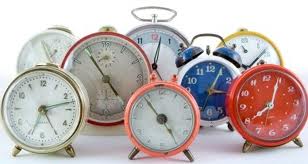
You've heard the phrase, "Timing is everything," right?  Sometimes it's used to to explain why something happens.  Sometimes it's used instead of a single word, "Luck."  But, timing is indeed important when it comes to taking medication.
In life correct timing can make all of the difference between success and failure.  And, treating diabetes is no different.  In fact, it's far more important than I ever imagined.
Dr. K will go into the best times to take meds sooner or later, because it does matter when you take them.  (Like how I volunteered you, K?)  Two things have happened recently, and I don't believe in coincidence most of the time, hence this blog entry.  You know, even in this, I guess timing is everything.  That just occurred to me.  Yes, I'm a bit thick sometimes.
The two things:
  1. In my quest to lower my glucose readings and eventually my A1c, I started looking at the time I took my meds.  (Yes, I am a bit analytical.) For most of the last three years I took them in the earlier morning before 6:30, and then again late at night - say about 10:00.  It worked pretty well for me since for the last 18 months my A1c has been between 5.9 and 6.2.  But, about ten days ago I started taking the medication at night at about 7:00, or so.  Guess what?  My readings are a bit lower and more consistent, now.  I know, for most of you that's more like, "Well, duh!"  I'm just a slow learner sometimes.
  2. The second thing that happened was a comment from a reader about higher readings in the morning two hours after eating than they thought they should have.  I forwarded the comment to Dr. K who explained to me that when the medication is taken is incredibly important because different meds get to maximum effectiveness at different times - some get effective faster than others.
So, in both cases, timing is everything.  You have to know when to take your meds in order to gain the most from them and to maintain a consistent glucose level in your body.  And, since Dr. K is the expert, I know she will address this pretty soon.
Are these two items coincidence?  I think not.  It was a matter of timing - the reader's comment and my changing the time I take my meds in search of a slightly lower number.
Indeed, Timing is everything!
As always, thank you for reading.

Thursday, September 13, 2012

Diabetes Survival Guide!


You've been told you have Type 2 Diabetes.  Your A1c is something higher that 6.5.  So, now what?  You have three basic tools to control Type 2 Diabetes: medication, exercise and diet.  Using all three, you can control and manage the disease.  But, what in the world is diabetes?
(I have used survival guides most of my professional life.  A survival guide gives you just enough information to 'get your work done' if everything is normal and is a reference resource until you gain experience.  And, I probably should have written this a while back, but it just occurred to me that it might be needed.  Plus, it also helps that I have a number of the pieces in place to which to refer.  Could it be seredipity?)
Your doctor has told you that you will probably have to take some medication to lower your A1c.  No surprise.  The doctor wants to get your A1c down ASAP - think of it as getting the poison out of your system.  So, meds are a very normal route.  In fact, they might start you on metformin, one of the most widely prescribed drugs fo diabetics.
But, what if you don't want to take a medication?  Well, there are those who decide they want to control diabetes through diet and exercise - and some are successful!  Some control and beat back the disease through the diet and exercise route.  But, the number who are successful is limited - very limited.
The first goal is to get your A1c down as soon as you can.  You can always stop taking meds if you see your numbers dropping and getting an A1c under 5.5; there is no rule that states you have to take them forever.  This is a decision you should make after talking with your doctor.  So, think about taking the medication.
For me, it was a no brainer.  I knew diabetes could cause serious damage and could lead to death.  I chose to take the meds to get myself back to 'normal.'  Diabetes normal is not good enough for me.  Normal is normal is normal, even if it's done with the aid of medication!
Regardless if you are taking medication, or not, you should start to exercise.  Read about my post on exercise to get a beginning point.  I still just walk, but a lot faster than I did at the beginning.  If you are going depend on exercise to gain more control, you will need to use cardio exercise and resistance training (aka weightlifting).  And, plan to spend about an hour a day, five or six days a week of exercise time if you have the weights at home.  If you go to a gym during a busy period, figure at least two hours a day.
You are going to have to start glucose testing at least twice per day.  Most of the instruction I have seen is either incomplete, or really cause pain.  For complete instructions on how to get a good reading without pain, read this.
And, you are going to examine your diet. Chances are it will change.  Mine did - a lot.  I started a lower carb diet and over the course of nine months I lost about 60 pounds between diet and exercise.  Diet is so very, very important as you work to control diabetes.
And, to bring it all together, I have strongly recommeded a food diary.  Keeping one was so helpful in the beginning as I was lowering my A1c - it told me what I could and could not eat if I paid attention to my meter readings.  The food diary continues to be a tool for success and something I go back to when I see my numbers creeping up.  You can read about it here and then download it by following the instructions in the post.
Just so you know, I started my diabetes journey with an A1c of 13 - that's pretty high.  My most recent test gave me a 6.1.  Blood pressure 114/80.  Weight seven pounds up over a year's time, which I am losing - I got a bit cocky when I had a test result of 5.9!  I lose the weight, keep up with my diet and meds, and I should be at about a 5.8 or lower when tested again.  I mention all of that just so you know I have first hand knowledge of what you are facing - and KNOW you can be successful!
As always, thank you for reading.  God Bless and know you can beat the enemy; you CAN control diabetes.

Please feel free to send me your comments.

Friday, July 27, 2012

Summer - Great for the Beach; Bad for Meds

The summer is here...and it's only going to get warmer...okay, hot.  And just like babies and animals, meds should not be locked up in hot cars!

I was talking with my friendly pharmacist who does to want to be identified by name (but works at the Target in Anaheim at Euclid and Lincoln) and he reminded me that meds (pills and capsules) should not be exposed to high heat - like that in a closed car or car trunk.  Why? He said they lose potency - something happens to the meds that is caused by heat that makes them less effective.  It does not make them dangerous (unless they are supposed to be refrigerated).

What do meds need to retain their strength? Meds need to be kept at room temperatures - about 80 to 85F.  The interior of a locked car can easily get to 120F.  And, a closed car trunk can get crazy hot.  If you are taking that big road trip this Summer, carry the meds with you in the air conditioned car. 

By the way - this applies to all meds - diabetic meds, antibiotics, even aspirin! 

There's more information for you to read here.

As always, thank you for reading!